
Search
Upcoming Workshops
- PRIVATE EVENT: CUSTOM MULLED WINE(2 days)
- Workshop: Make Moisturizing Cream at Karma Coop(4 days)
- PRIVATE WORKSHOP Worker's Centre(11 days)
- Hanukkah(16 days)
- Kabbalat Shabbat (Chanukkah edition!)(16 days)
- Make the Yuletide Gay Holiday Market(24 days)

Calendar of Workshops & Events
User Login
Navigation
How To Clean Your Terra Cotta Water Purifier Compartments
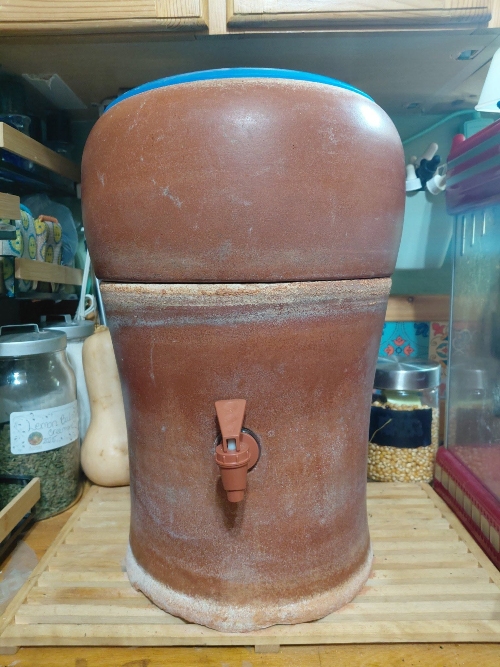 This is my 17 year-old Stefani Water Purifier, the now discontinued Linea model. You can see the typical patina on the terra cotta, and water marks from efflorescence that formed over time.
Earthenware pots have been used for millennia to cook with and to hold clean drinking water at a cool temperature.
White Crust aka Efflorescence vs. Mould:
Efflorescence is the migration of water-soluble mineral salts to the surface of a porous material (such as terra cotta earthenware, concrete, brick, stone, or mortar), where the water evaporates and leaves behind a white, chalky, or crystalline mineral coating.
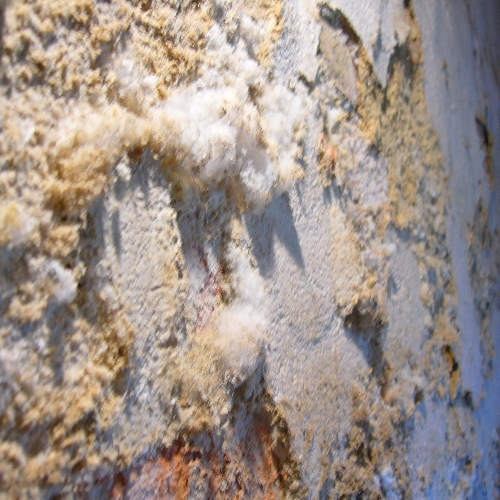 This is Primary efflorescence on a brick wall in Germany. Photo thanks to User: Mattes, Public domain, via Wikimedia Commons

When you see a dry, chalky, crystalline white buildup on the outside, that is harmless mineral deposit from water commonly called limescale. The crust on water lines is made mostly of calcium carbonate along with magnesium compounds, but can also contain any of the minerals in your local water including iron, colouring the scale pink to red to brown, or when copper or brass is present, bluish to greenish!
Scrubbing with a little white vinegar will dissolve it.
But My Stefani Water Purifier Still Needs Cleaning!
To thoroughly clean terracotta cookware or a water dispenser scrub it with a baking soda paste or a white vinegar and water solution using a new or dedicated soft-bristled brush or sponge. Because unglazed clay is porous and holds drinking water, DO NOT USE dish soap, detergents, bleach or scented cleaners, as they will soak into the clay and potentially ruin the taste of your water.
How to Clean & Sanitize Your Stefani Water Purifier Compartments:
First, scrub your compartments inside and out with a new non-metallic scrubber using only plain running water. This will remove mineral build up and any sediment, and because the terra cotta is already wet, prevent it from absorbing the cleaning agents you will use in the next steps.
Scrub with Baking Soda: Mix baking soda with a little water to form a thick paste, or sprinkle baking soda or coarse salt directly onto a damp, clean scrub brush or coconut coir scrubber. Scrub the inside, outside, lid, and around the spigot thoroughly.
Treat Stubborn Stains with Vinegar OR Peroxide: For active mould spots, wipe or spray the area with white vinegar OR hydrogen peroxide. Let it sit for 15 to 20 minutes to kill spores inside the pores, then scrub again.
Clean the Spigot and Floats Separately: Remove the tap aka spigot and its two washers and nut. Unscrew the floats from the stem of the filtres. Wash these carefully under plain running water. Scrub inside the nozzle and rubber gaskets with a small bottle brush or clean toothbrush dipped in vinegar or hydrogen peroxide. Then let soak in a jar of vinegar while you clean the compartments.
Rinse & Sun-Dry Completely: Rinse the dispenser several times with clean running water until no vinegar smell or baking soda residue remains. Place it in direct sunlight for several hours (or a full day) until the clay is completely dry inside and out. Heat, fully drying out and UVC light from the sun help kill any lingering mold spores.
How to Keep Mould From Coming Back
Because terracotta naturally sweats to keep water cool, stagnant air and constant dampness on the outside can make an ideal home fopr the mold that naturally lives in the air around us.
Improve Airflow: Placing your water dispenser on a raised stand or coaster, keeping the lid slightly ajar if needed, and positioning it in a well-ventilated spot with space all around it rather than a humid corner. Do not keep your water purifier IN a cupboard. It is made to be placed on its own stand or on a countertop.
Wipe Down the Exterior DAILY: Wipe moisture off the outside of the pot daily with a clean, dry cloth. It's best for your water purifier to have its own dedicated wipe cloth, or use a freshly laundered clothe before you wipe down the counters.
Use and replenish the water daily. Do not let the same water sit without dispensing for days on end. If you go away for a few days, empty both compartments and let them dry on the counter until you return.