
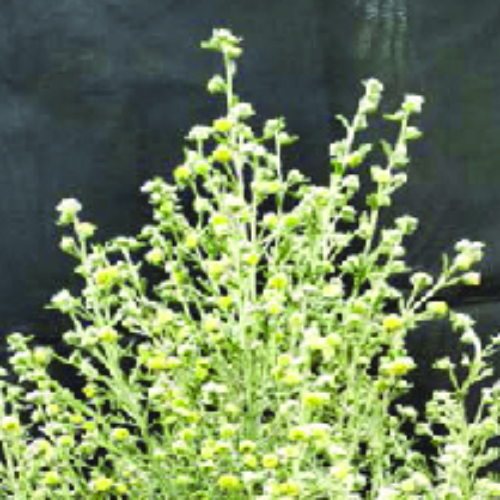
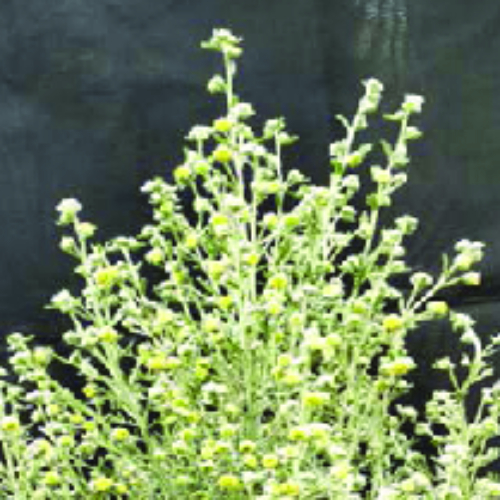
Artemisia pallens aka davana, dhavanam from the Sanskrit name दमनक (damanaka), (Tamil: மரிக்கொழுந்து, தவணம், Marathi: दवणा, Kannada: ದವನ) is hydro distilled from the stem, leaves and flowering tops in India. Native to Southern India, each day, the faithful offer Davana blossoms to Shiva, the god of Transformation. The flowers remain on his altar throughout the day and are removed in the evening.
Aroma: Opens with warm herbaceous and fruity undertones—often compared to ripe dried fruits like plum or apricot, honey, and even cognac. A unique, sweet, balsamic, fruity, woody, masculine floral scent, valued in perfumery for its complex, ever-changing scent on different people, often described as boozy or jammy. It smells like apple juice to me!
Common Uses: In aromatherapy for stress relief, relaxation, and spiritual balance, offering potential antiseptic and analgesic properties. It is used in aromatherapy to combat anxiety, is anti-infectious, soothing to dry, rough skin, and a stimulant to the endocrine system.
Composition: Davanone is the dominant sesquiterpene ketone (often making up 50–65%) responsible for both its characteristic aroma and its therapeutic properties. Ethyl cinnamate 4 – 10%, Geranyl acetate 0.5 – 2%, Linalool 0.3 - 2%, L‑Limonene 0.01 - 0.5%, alpha‑Pinene 0.05-0.5%
Perfumery: Davana Essential Oil rounds out blends and enhances complexity. Even at low concentrations, it imparts a luxurious lift and smooths transitions between top, heart, and base notes. When applied to the skin, Davana is said to have a different scent on different people, a peculiar property which is highly valued in perfumery to create fragrances with individual notes. Its oil, rich in davanone, blends well with florals, woods, spices, and amber, providing tenacity and a grounding, mood-lifting effect, making it a versatile ingredient in fine fragrances. Davana's intoxicating, sweet, and "boozy-fruity" aroma and is widely used in high-end perfumery and aromatherapy.
CAUTIONS: Davana should be used cautiously, especially by pregnant women, due to its ketone content.
Photo thanks to ResearchGate and uploaded by Ravi Kumara R.